High-Temperature Corrosion-Resistant Titanium Rotary Flash Drying Machine_TA2 and TA10 Material Customization Solutions_Jiangsu Bohong with Over 10 Years of Experience in Special Material Drying Equipment Manufacturing
I. Application Value of TA2 and TA10 Titanium Rotary Flash Dryers
In the production processes of fine chemicals, pharmaceutical intermediates, new energy materials, and high-purity powders, certain materials exhibit strong corrosiveness, high thermal sensitivity, or strict requirements for metal impurity control. Conventional stainless steel equipment may face issues such as corrosion, shortened service life, and material contamination under specific operating conditions. Therefore, rotary flash dryers made from titanium have become a critical solution for drying special materials.
Jiangsu Bohong specializes in the research, development, and manufacturing of drying equipment using specialty materials, boasting over 10 years of experience in drying equipment production. Based on customers’ material characteristics, corrosion environments, operating temperatures, moisture content, and product quality requirements, we offer customized TA2 and TA10 titanium rotary flash dryers, providing comprehensive equipment solutions for powder drying under high-temperature, corrosion-resistant, and ultra-high purity conditions.
A titanium rotary flash dryer is not simply a conventional machine with contact surfaces replaced by titanium; rather, it requires an integrated evaluation of material corrosion behavior, equipment structure, heat transfer methods, gas-solid interaction, sealing design, and manufacturing techniques to ensure that the material selection matches actual process conditions.
II. How to Choose Between TA2 and TA10 Titanium Alloys?
TA2 is industrial pure titanium, known for its excellent corrosion resistance, formability, and weldability. It is suitable for various chemical media and applications requiring tight control over metallic contamination. For materials verified to be compatible with corrosive media and suitable for use with industrial pure titanium, TA2 can be used to fabricate the material-contact components of the dryer.
TA10 is a titanium-palladium alloy, typically offering superior corrosion resistance compared to industrial pure titanium in specific media—particularly in certain reducing acids and specialized corrosive environments. However, its actual corrosion resistance depends on factors including medium composition, concentration, temperature, impurity levels, and flow conditions, so applicability cannot be determined solely based on material designation.
Jiangsu Bohong conducts targeted material selection based on process conditions, evaluating TA2, TA10, and other suitable materials. In applications involving simultaneous exposure to high temperature, corrosion, and wear, additional assessments are required regarding material strength, wear resistance, thermal expansion, weld joint performance, and long-term operational conditions.
It should be emphasized that while titanium offers excellent corrosion resistance, it does not necessarily withstand all high-temperature corrosive media. When dealing with concentrated acids, strongly reducing agents, high-temperature halides, or complex mixed media, material corrosion resistance must be evaluated based on actual process parameters.
III. Working Principle of Titanium Rotary Flash Dryer
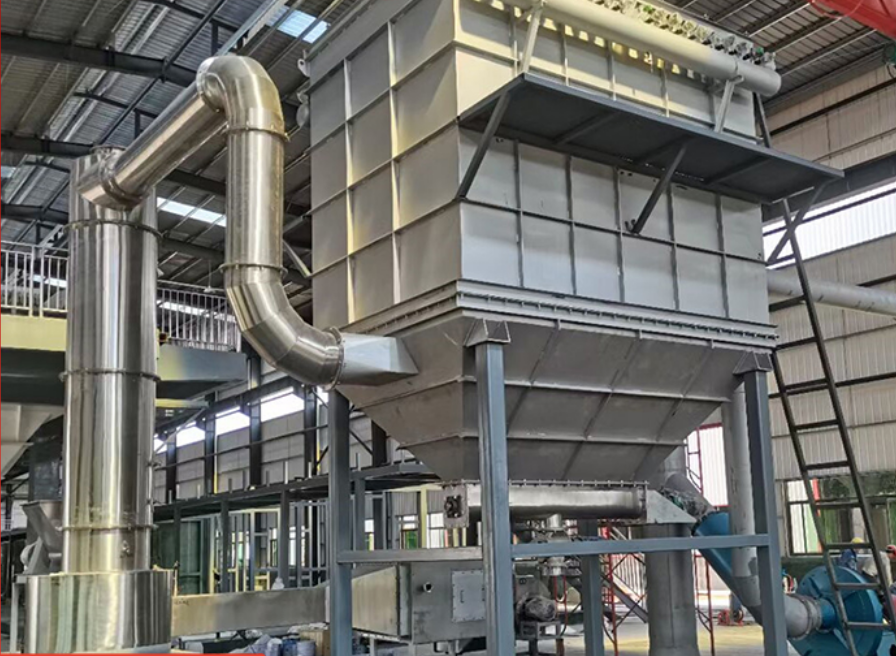
Rotary flash dryers are ideal for filter cakes, pastes, wet powders, and some dispersible slurries. During operation, wet material enters the dryer and is broken down and dispersed by internal agitation mechanisms, achieving thorough contact with hot air. Moisture or volatile components on the surface of the particles rapidly evaporate upon heating, and fine particles are carried by the airflow into subsequent classification and solid-gas separation systems.
The high-speed rotating dispersion mechanism inside the equipment enhances material dispersion, reduces agglomeration of wet feed, and improves gas-solid contact efficiency. The dried powder travels with the airflow into cyclone separators and downstream dust collection units for final product recovery, while exhaust gases are treated according to material properties and environmental regulations.
For corrosive materials, feed components, inner walls of the drying chamber, dispersion mechanisms, discharge channels, and other contact parts can be constructed from TA2 or TA10 as per design specifications. Whether to adopt fully titanium structures, titanium-composite structures, or localized titanium contact zones depends on corrosion severity, manufacturing feasibility, and investment budget considerations.
IV. Customized Design for High-Temperature and Corrosion-Resistant Conditions
1. Customization of Titanium Components in Contact with Materials
Based on the corrosiveness and purity requirements of materials, select appropriate contact materials for the drying chamber, feeding device, dispersion mechanism, discharge piping, and collection system. For components subject to wear, consider both titanium’s wear resistance and actual particle erosion conditions; when necessary, optimize structural design to reduce wear risks.
2. High-Temperature Drying System Design
For processes requiring elevated drying temperatures, configure the hot air system, temperature monitoring devices, and automatic control systems according to the material’s thermal stability and volatility characteristics. During design, clearly distinguish between inlet air temperature, actual material temperature, and equipment wall temperature—avoid using only hot air temperature as an indicator of product heating level.
The allowable operating temperature for titanium equipment must be determined by comprehensively considering specific alloy grades, structural stress, weld joints, medium corrosiveness, and design pressure. In high-temperature applications, special attention should be given to titanium oxidation, hydrogen embrittlement, and related safety risks—temperature ranges used for conventional stainless steel equipment cannot be directly applied.
3. Dispersion and Wall-Adhesion Prevention Design
For wet materials with high moisture content, high viscosity, or a tendency to agglomerate, design feeding methods, dispersion structures, hot air distribution, and classification mechanisms based on the material’s rheological properties. This improves material dispersion within the drying chamber and reduces risks of wall adhesion and localized overheating.
4. Sealing and Anti-Corrosion Design
For materials exposed to corrosive gases, solvent vapors, or requiring closed production, systematically design equipment connections, shaft seals, inspection ports, and exhaust pipelines. If the process involves flammable solvents or combustible dust, implement explosion-proof, electrical, pressure relief, and grounding measures according to the material’s hazard characteristics—reliance solely on the titanium body’s inherent explosion resistance is insufficient.
5. Automation Control Design
Configure sensors and controls for feed rate, hot air temperature, system negative pressure, outlet air temperature, and key equipment operational status according to process requirements, enabling real-time monitoring and adjustment of critical parameters. For continuous production projects, integrate interlocking controls with upstream conveying, metering, and downstream product collection systems.
V. Which Materials Are Suitable for Evaluation of Titanium Rotary Flash Dryers?
Titanium rotary flash dryers are suitable for certain inorganic salts, fine chemical intermediates, halide-containing materials, precursors for new energy materials, and other wet materials requiring corrosion resistance or strict control over metallic impurities.
For chloride-based, fluorine-containing, acidic salt, or other specialty chemicals, first confirm the actual composition, temperature, concentration, and moisture state of the medium before determining whether TA2 or TA10 is appropriate. Some materials may be better suited to titanium rake-type vacuum dryers, single-cone vacuum dryers, or alternative drying methods, depending on factors such as material viscosity, thermal sensitivity, drying endpoint, and continuous production requirements.
If materials have stringent limits on iron, copper, nickel, or other metal impurities, simultaneously evaluate the material composition of all contact surfaces, welding techniques, surface treatments, cleaning validation procedures, and potential contamination from equipment wear—do not focus solely on the primary material while neglecting other contacting components.
VI. Jiangsu Bohong Titanium Drying Equipment Customization Services
With over 10 years of experience in drying equipment manufacturing, Jiangsu Bohong provides customized design and fabrication services for specialized drying equipment made from TA2, TA10, and other advanced materials, serving industries including fine chemicals, pharmaceuticals, new energy materials, and specialty powders.
For projects involving high temperatures, strong corrosiveness, strict metal impurity control, or complex process conditions, Jiangsu Bohong can work with clients to conduct equipment selection, material assessment, structural design, heat balance calculations, and integrated system solutions based on provided material data, process requirements, and site conditions.
During the selection phase of a rotary flash dryer, it is recommended that customers provide the following information: material name, wet feed capacity, initial moisture content, target moisture content, material temperature, drying temperature, composition of corrosive media, heat source conditions, continuous operation time, and relevant safety data. For special corrosion conditions, it is advisable to simultaneously supply material samples or reliable corrosion test data to further determine the suitability of TA2, TA10, and other alternative materials.
Jiangsu Bohong—specializing in customized drying equipment for specialty materials, offers TA2 and TA10 titanium alloy rotary flash dryers and tailored drying solutions for challenging operating conditions. We welcome customers with requirements for high-temperature corrosion resistance, special materials, or high-purity powder drying to engage in technical discussions to jointly determine optimal equipment design, material selection, and process parameters.